A few days ago, a friend of mine, a bright young scientist, spoke passionately about the worth of scientific method and education. Then he turned to me and asked, “What will you do after you graduate? A master’s degree, maybe?”
I froze. Of course that’s something I long for, but his face carried worry more than curiosity. He admitted he feared accumulating knowledge without creating anything real. “What if all these research papers and medals end up empty?” he said. “What if one day my family asks, ‘How much do you make?’ or ‘Are you happy?’ and I have no answer?”
Today, sitting in class, another friend, another equally brilliant young scientist who has achieved many awards, asked me the same thing. “You’ll take a master’s, right?”
Again. I hesitated. I told him I would, if I earned a scholarship. He smiled and said it would be a waste if I didn’t continue. Praise like that should feel flattering, yet it left me uneasy.
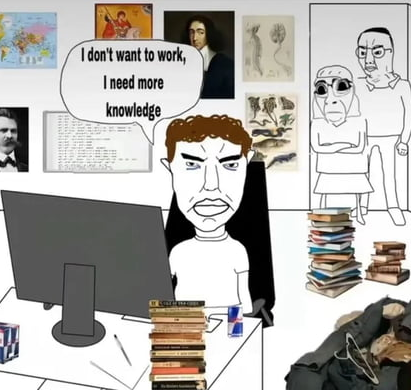
That unease is the real question. Intelligence alone cannot quiet it. The first friend’s fear lingers. That we might live inside the loop of ideas, we can be smart, capable, but detached from life itself. You can finish every degree on earth and still be as lost as someone who never finished school if thought never turns to practice. Knowledge without embodiment is unfinished humanity. That means we’re not embracing reality fully.
We call that state as immaturity, though it hides behind certificates and titles. Time guarantees aging, not growth. People die young and old, but not everyone dies mature. That should frighten us more than failure itself.
Psychologist Carl Jung called this psychological state of man-child and immaturity as the “puer aeternus” literally the “eternal child”. The eternal child resists grounding himself in reality. To overcome it, said Marie-Louise von Franz (another Jungian psychologist), is simply mundane work. It means tying ideas to ordinary tasks, and learning to translate dreams into daily acts. It feels like losing potential, yet it’s how potential becomes real. Very very scary stuff for child-like adults like me.
In this 9th episode of Everyday Pilgrim Journal (EPJ), I want to discuss the beauty of maturity and the dance between idea and reality. How they feed each other, and how we might learn to move between them.
“Knowledge without praxis (practice/action/doing) is the demons’ theology.”
–Saint Maximus the Confessor
The Base Framework
The word philosophy comes from ancient Greek, combining philo- (loving) and sophia (wisdom), literally meaning “love of wisdom.” Since this article is about practical philosophy, and since I hope that after reading this you’d acquire some wisdom to think for yourself, to seek truth and be more mature (which is appreciating life and your existence more fully), let me start here. A part of this fuller life is the ability to see the world in nuance. What do I mean by nuance? Nuance is the ability to read between the lines.
Recently I watched a clip of a non-denominational pastor who proclaimed that “The material world is for fools. The Roman Catholics built beautiful cathedrals and their priests wear sophisticated outfit because they are blind sheep following their Papal system. They only know Christ through mere outer appearances and political lies made by their pope, not immaterial invisible reality. Mystical reality is the only absolute truth.”
On the other hand, nowadays we see also many “enlightened” chronically online youth and scientist-wannabes who extremely embrace materialist thinking. Basically saying: “The ultimate reality is the material world. Everything that cannot be measured is either meaningless or absurd. Feelings are simply chemical reactions in our physiology.”
I don’t agree with either, not because there is no truth in their claims, but because their views obstruct us from seeing and experiencing life in its fullness.
The same pastor who taught that mystical reality is the only reality also ironically scolds his congregation for not wearing proper shoes. Why bother with shoes if mystical reality is the only that matters?
The nihilists who claim truth in an absolutely meaningless materialistic world are ironically the same people who subconsciously try to create meaning for themselves, combating their nihilistic view in their immaterial minds.
“That’s part of the sickness in America, that you have to think in terms of who wins, who loses, who’s good, who’s bad, who’s best, who’s worst. We always think in extreme terms.”
—Marlon Brando
Now we see that as humans we’re living in this certain hypocrisy. Our minds lean toward certain extreme ontologies, but in our daily lives we subconsciously don’t agree with our own ideologies. So it is important to live happily by living what we truly believe. That is why I am inviting you to enjoy this nuance, to read between the lines.
To help us out, Søren Kierkegaard, the father of existentialism, taught that in the quest for truth, we should be able to discern what is our Self. When the Self is misaligned, we experience existential despair. The Self is a synthesis of two opposing forces:
The Finite (our physical body, limitations, facts, objectivity)
The Infinite (our imagination, spirit, eternal possibilities, the unseen mystical aspects, subjectivity)
Despair happens when these two sides are out of balance. Those despairs are:
1. Despair of not knowing one has a self. This is where the person is immersed in finite life: pleasure, success, social roles. They forget to tend their infinite part, thus they feel like their life is not complete, but cannot understand why. This is like the materialist in the example.
2. Despair of not wanting to be oneself. This is the type of despair where the person rejects the self. They are aware of the self and their existence but flee to the infinite (imaginations, fantasies, and daydreaming) to avoid doing any concrete action in their finite domain. This is the crude idea of the petty pastor in the example.
3. Despair in defiance. This is where one is totally aware of the finite and infinite aspects but refuses their dependence on the power that created them (God), forcing their own will to fuel the quest to create their own meaning and become Übermensch or man-god. Hating the idea of a god but ironically claiming oneself as god. This is the nihilist in the example.
Hence, we see that the limit of reality and our existence revealed to us through empirical means is these two forces. That’s why we should take them seriously.
To continue and take action from this nuance, let me divide this article into two sections: the seed and the soil.
The Seed: Start by Realizing Fairy Tales are True
I believe you’ve heard of the “manifestation” trend. It is a new age claim that thoughts alone can create reality. Some go as far as to believe they can win love or wealth by merely thinking about it hard enough.
I disagree with the superstition, but not entirely with the principle. Thoughts do shape reality, just not in the absolute arbitrary way they imagine.
Just think about the power of an insult. It’s only words, yet it can bruise the heart. Or the pain of heartbreak, purely emotional, yet capable of killing your appetite, sleep, and even reason.
How can something so intangible and ‘unreal’ cause such tangible and real pain?
To understand this mysterious bridge between thought and flesh, we must admit something most adults forget: fairy tales are true. Yes, they’re not 100% factual, but they are truthful in the sense that they usually contain deeper truth that is hard to be conveyed through a cold objective report.
We call them childish and naïve, yet if fiction were truly meaningless, there would be no such thing as anxiety, overthinking, or heartbreak as we mentioned before. All of these are intangible, some are symptoms of engaging with imagination, these are the proof that ideas can wound or heal the body.
“Ideas have consequences. Ideas can be explosive.”
–John Lennox
History agrees. Out of the real injustice of the bourgeoisie that he experienced, Karl Marx wrote The Communist Manifesto. His ideas began as reflections in a study, then spilled into cafes, universities, revolutions, and finally into the dynamic of liberation and tyranny. Words become wars. Ink became blood.
“The pen is mightier than the sword.”
–Edward Bulwer-Lytton
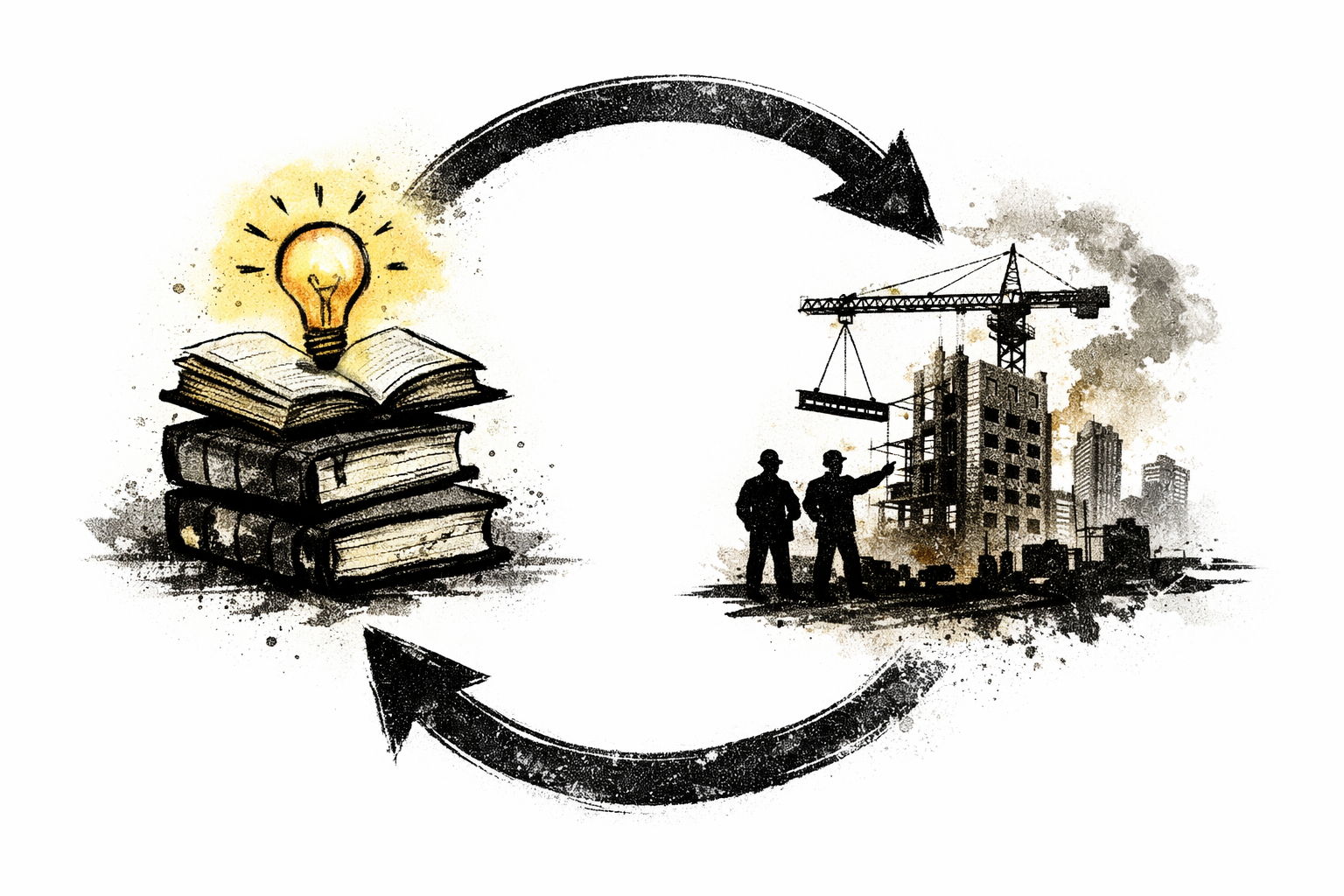
Every idea, once spoken, seeks embodiment. And every embodied act becomes an idea again when remembered, retold, studied.
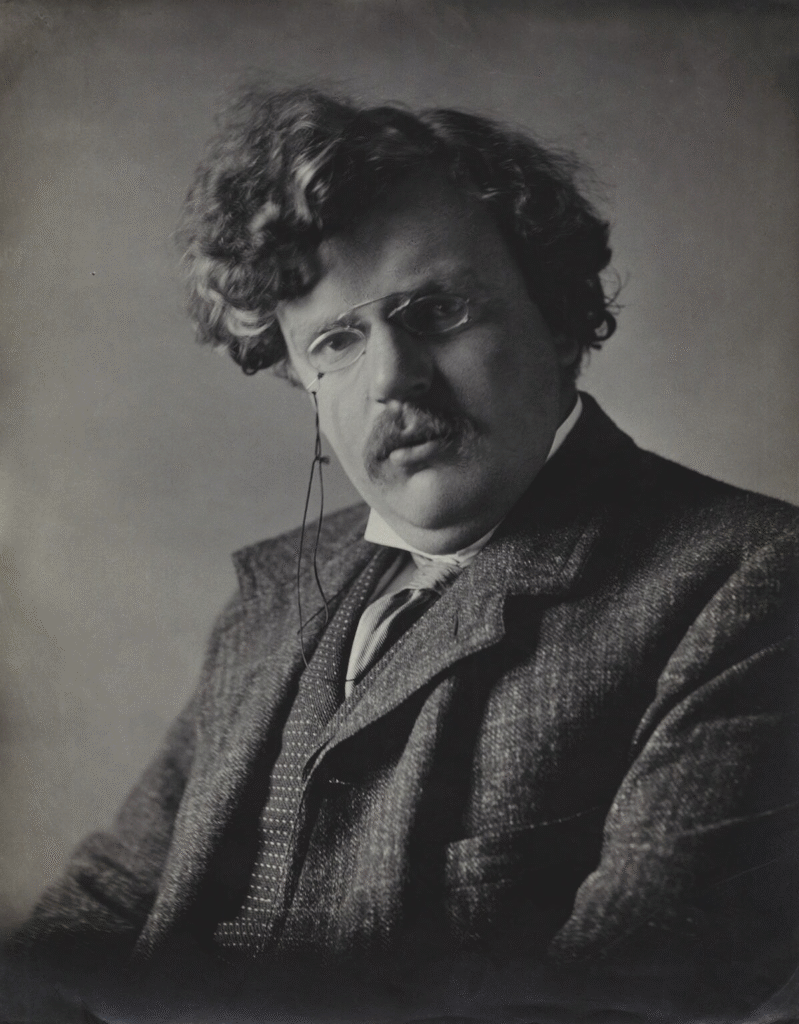
To grasp why this cycle exists, G. K. Chesterton can help us.
G. K. Chesterton
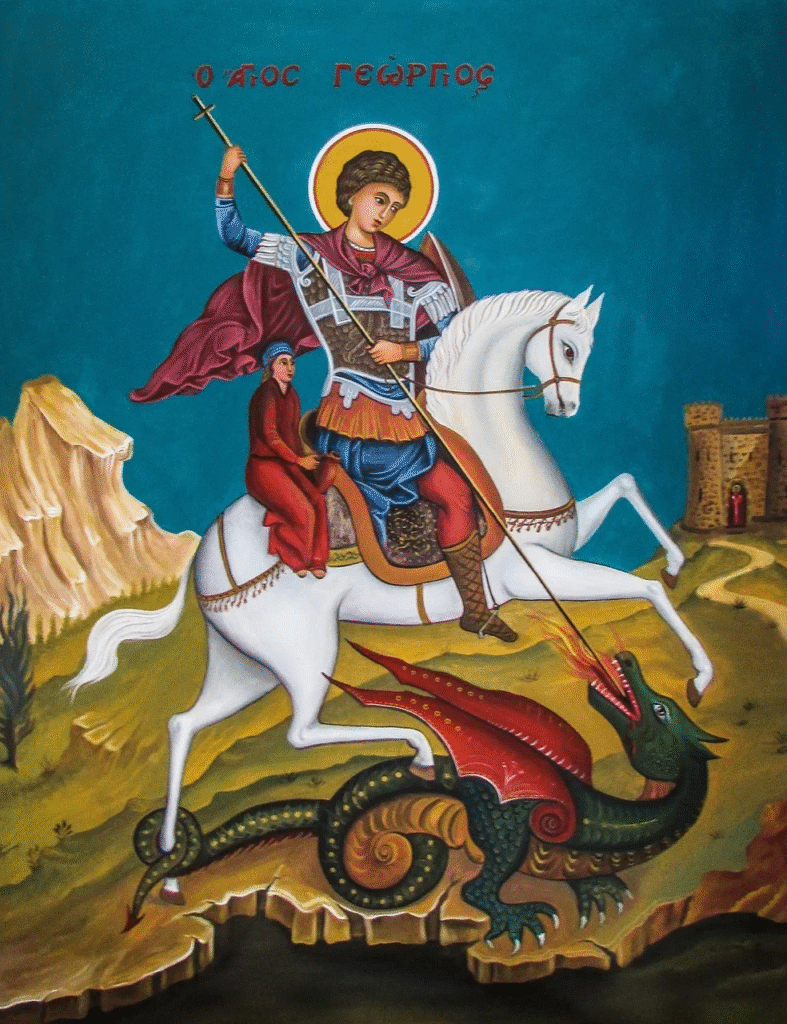
Neil Gaiman paraphrased him: “Fairy tales are more than true, not because they tell us that dragons exist, but because they tell us that dragons can be beaten.”
Take a look at the full quote. This is what G. K. Chesterton wrote in his book Tremendous Trifles:
“The timidity of the child or the savage is entirely reasonable; they are alarmed at this world, because this world is a very alarming place. They dislike being alone because it is, verily and indeed, an awful idea to be alone. Barbarians fear the unknown for the same reason that Agnostics worship it–because it is a fact. Fairy tales, then, are not responsible for producing in children fear, or any of the shapes of fear; fairy tales do not give the child the idea of the evil or the ugly; that is in the child already, because it is in the world already. Fairy tales do not give the child his first idea of bogey. What fairy tales give the child is his first clear idea of the possible defeat of bogey. The baby has known the dragon intimately ever since he had an imagination. What the fairy tale provides for him is a St. George to kill the dragon.”
Saint George Slaying the Dragon
Chesterton’s full passage explains that children don’t need stories to learn fear; they already know fear. What they need is a vision of its defeat. Fairy tales don’t create dragons; they reveal courage.
In other words, imagination DOES NOT pull us away from reality; it points toward its deeper structure. Evil and virtue, fear and bravery, all are realities the body feels, and the mind interprets through story.
Stories shape us, even when they aren’t “true.” Not because we can’t comprehend reality without them, but because they express truths too vast for literal speech.
Look at your own life. What do you do now? What are your good and bad qualities? Compare them to the stories that have surrounded you since childhood, it could be gossip from your aunt, or tales of heroism from books.
In my case, I’ve noticed that the bad habits and laziness I struggle against often trace back to stories I’ve heard from a cynical friend. He always told me his opinion and stories about how unfair the economic system is. His bitterness and patheticness became seeds in my soil.
So now we see that ideas, even imaginary ones, carry weight. They shape the way we live and see the world. That’s why we must discern carefully what we choose to engage with. Say yes to good books, honest friends, and real challenges. Say no to shallow, numbing content, dishonest company, and empty distractions.
Saint Paul wrote in Philippians 4:8:
“Finally, brothers, whatever is true, whatever is honorable, whatever is just, whatever is pure, whatever is lovely, whatever is commendable, if there is any excellence, if there is anything worthy of praise, think about these things.”
Choosing what to dwell on cannot easily be taught. It can only be discerned and transformed into reality through experience and, most importantly, through faith.
Why faith? Let’s move on to the next section.
The Soil: Where We Plant the Seed and Condition it to Grow
I’ve been a huge fan of Cristiano Ronaldo since 2009. On September 6th, 2025, I watched Cristiano Ronaldo face Armenia in a WC Qualifier match. It ended in a 5-0 win for Portugal. Cristiano scored 2 goals, one a tap-in and one a long shot from outside the box. A few days later, he scored again against Hungary. At the time of this post’s writing, he’s racking up 945 official career goals. That’s an insane number. He’s a 40-year-old man running on the pitch with stallion-like vigor as if he were 30! And here I am, in my early 20s, still not as fit as he is.
Some people become inspired and take their health more seriously, but some people refuse to put in the work and instead compare Ronaldo to other athletes, insulting him hopelessly in Instagram and Twitter comment sections.
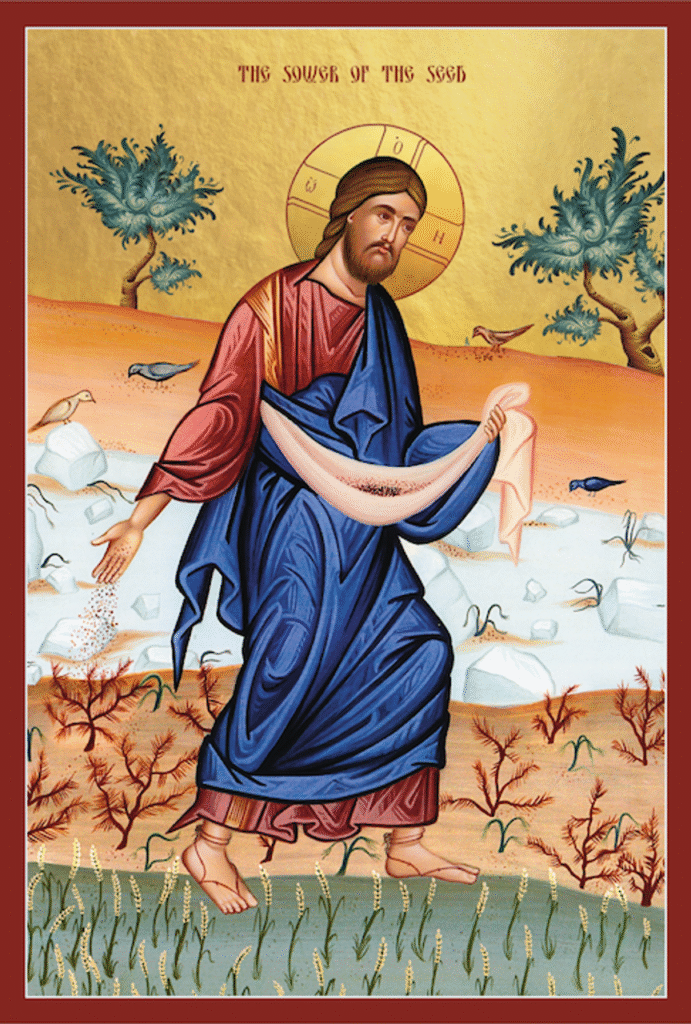
It is the same event, but it sparks different reactions. This is the soil. Both of these sections are taken from the Parable of the Sower in the Gospel of Matthew Chapter 13, where Christ the Sower, planted the same seed, but different soils responded differently.
Thus, we should choose what we consume (the seed), and at the same time cultivate and clean the soil of our hearts to become good receptors, letting the seed grow well.
But how do we cultivate the soil? How do we bridge the infinite and the finite in ourselves without falling into the three despairs Kierkegaard warned us about? This is where we must look at the ultimate answer to the transmutation of idea to reality: the Incarnation.
Parable of The Sower
The God-Man: The Perfect Union of Infinite and Finite
Remember Kierkegaard’s framework? The Self as a synthesis of the Finite and the Infinite. We saw how despair happens when these two are out of balance, which can happen in different scenarios: when we’re lost in pure materialism, pure fantasy, or defiant self-creation as man-god, where one desperately tries to create one’s own meaning.
But there is one figure in history who accomplished this synthesis perfectly: Jesus Christ, the God-Man.
The Incarnation is not just a theological doctrine to be studied. It is the very pattern of reality itself. The Infinite became Finite. The Logos, the eternal Word through which all things were made, became flesh and dwelt among us. God, who is pure spirit, unlimited, and eternal, took on a human body with all its limitations, hungers, and capacity for suffering.
Saint Athanasius wrote in On the Incarnation:
“God became man so that man might become god.”
This is the doctrine of theosis (deification). Not that we become God in essence, but that we participate in the divine nature through union with Christ. This is the ultimate goal of human existence: to unite the infinite within us (our spirit, our capacity for God) with the finite (our bodies, our daily actions, our mundane struggles).
This is the doctrine of theosis (deification). Not that we become God in essence, but that we participate in the divine nature through union with Christ. This is the ultimate goal of human existence: to unite the infinite within us (our spirit, our capacity for God) with the finite (our bodies, our daily actions, our mundane struggles).
This is the pattern we must follow. We don’t abandon our dreams and imaginations (the infinite) to become mere biological machines grinding through tasks. Nor do we abandon our bodies and responsibilities (the finite) to float in spiritual fantasies. We unite them, the same way Christ united divinity and humanity.
Theosis: The Daily Struggle of Becoming
But how? How do we participate in this divine pattern?
The practical answer is found in the Philokalia, that collection of texts from the Holy Fathers on the spiritual life. The word Philokalia itself means “love of the beautiful.” And what is more beautiful than the union of heaven and earth in a single human life?
The Fathers teach us that theosis happens through ascesis, the daily spiritual struggle. Not the struggle of achievement or accumulation, but the struggle of integration. It’s what Von Franz called “mundane work”: tying ideas to ordinary tasks, translating dreams into daily acts.
Saint Maximus the Confessor, whom I quoted at the beginning, gives us the key: “Knowledge without praxis is the demons’ theology.” Even demons have theological knowledge. Even Satan knows God exists. But knowledge without embodiment, without practice, without the finite act of love, that’s demonic.
The holy life is not about having mystical visions or accumulating degrees or achieving worldly success. It’s about the quiet, daily work of uniting what we know with what we do. It’s about taking the seed of a good idea (love, patience, courage) and planting it in the soil of our actual, messy, limited, finite lives.
“God walks among the pots and pans.”
—Saint Teresa of Avila
This is nepsis, watchfulness. The Fathers teach us to guard our hearts, to pay attention to what seeds we allow in. To notice when we’re drifting into pure fantasy (fleeing the finite) or when we’re drowning in materialism (forgetting the infinite). To catch ourselves in the act of despair and gently, with God’s grace, return to the synthesis.
In the previous post, I talked about the practice of The Jesus Prayer—”Lord Jesus Christ, Son of God, have mercy on me, a sinner”— which is itself a practice of theosis. It unites breath (finite) with prayer (infinite). It unites the name of Jesus (the God-Man) with our actual moment-by-moment existence. It takes the infinite reality of God’s mercy and grounds it in the finite reality of our need.
My friend’s fear that all his research papers and medals might end up empty is valid. They will end up empty if they remain ideas. But if they become embodied, if they serve actual people, solve actual problems, create actual beauty in this actual world, then they participate in the Incarnation. They become flesh.
This is terrifying because it means we might fail. Embodied things can be criticized, rejected, or proven wrong. Ideas floating safely in our heads are invulnerable. But they’re also impotent. They change nothing. They save no one. They don’t participate in reality.
Christ could have remained safely in Heaven, purely infinite, beyond suffering and death. But He chose to become finite. To be born in a feeding trough. To work with His hands. To get tired, to be misunderstood, to be rejected, and to be killed. He chose the vulnerability of embodiment because that’s where love lives, in the actual, the particular, the finite.
And He calls us to do the same.
Every time you take an idea and make it real (write that book, have that difficult conversation, start that project, serve that person, even just do the dishes with presence and attention), you are participating in the Incarnation. You are uniting the infinite and the finite. You are practicing theosis.
Every time you fail, stumble, and try again, you are learning what Christ learned: that finite existence is hard, limiting, often painful, but it is also where beauty and love and truth become real.
The fairy tale is true: dragons can be beaten. But not by ideas alone. Not by knowledge alone. Not by staying safely in the infinite realm of possibility.
Only by saints who get their hands dirty. Only by God-Men and God-Women who dare to plant seeds in actual soil, water them with actual sweat, and trust that something beautiful will grow.
Conclusion
To mature is to realize that fairy tales are true because reality itself is a story being told, a story of the infinite becoming finite, of the Word becoming flesh, of God descending to lift us up.
We are called to participate in that story. Not by rejecting either the seed or the soil, the infinite or the finite, the idea or the act. But by uniting them, day by day, struggle by struggle, until our lives become living icons of the Incarnation.
This is the wisdom I hope you’ve gained: that you are not meant to choose between being a dreamer or a doer, a mystic or a pragmatist, a scholar or a servant. You are meant to be both, united in Christ, participating in the divine nature through the daily work of love.
Start small. Choose one good idea today and embody it. Then do it again tomorrow. This is the path of theosis. This is how we mature. This is how we become fully human, which is to say, fully united with God.
“Glory to God in the highest, and on earth peace among those with whom he is pleased!” —Luke 2:14
The angels sang this at the Incarnation. May we live it in our daily struggle. May the infinite descend into our finite lives and make them beautiful.

Leave a Reply