
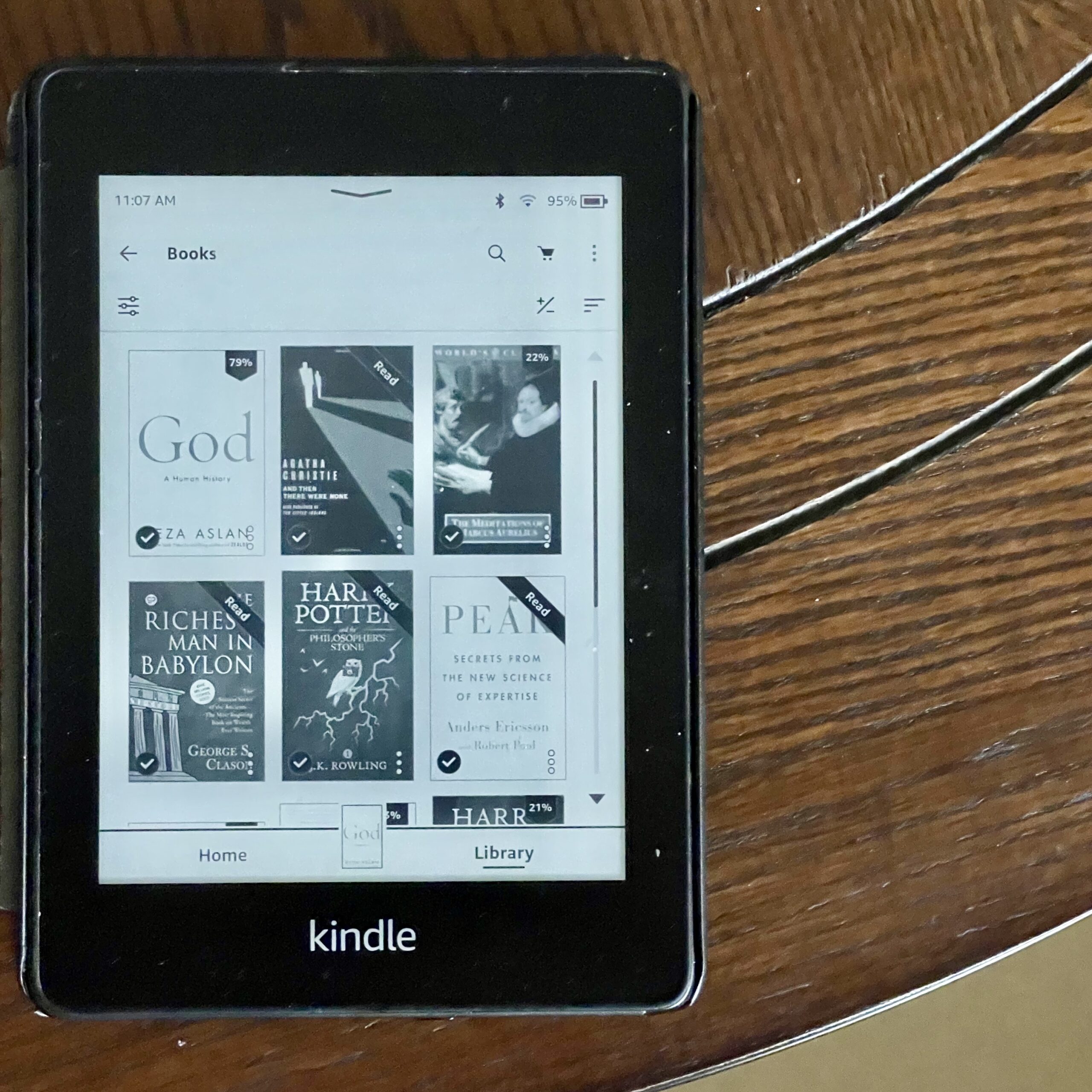
Have you noticed that activities like socializing and reading have always been considered cool in every era? It’s the same way we look up to someone who consistently goes to the gym and takes care of their body. I see reading as a positive lifestyle that everyone validates, because money alone cannot replicate it.
You can build a gym for yourself, but it does not automatically give you six-pack abs. You can buy a shopping mall or a central park, but it does not naturally make you a likable, sociable person. And to be specific about this article, you can hoard books comparable to the Great Library of Alexandria, but that does not make you a reader. To call yourself a reader, you have to actually have a reading habit. You have to live your identity.
I believe anyone could sense that being well-read is an overwhelmingly positive trait. If you radically believe that reading is inherently bad, then this guide is not for you. But if you share the same optimism as me, even just a little, then let’s get started. In this post, I’m going to practically guide you to start a reading habit and how to sustain it. But first because this whole blog is focused on the art of the examined life, we need to be clear on the why before the how.
Why do you want to start a reading habit?
Answer that first. And if you still have any excuses, we’re going to tackle them one by one.
The common ones I hear are:
- “No one reads in my social circle. It’s a nerd thing and I don’t want to be associated with it.”
- “I can’t focus long enough to finish a book, especially a longer one.”
- “I don’t know where to begin.”
We’ll get to all of these. But first, let me address the nerd thing directly.
Why Reading is a Unique Gift Worth Recovering
I strongly disagree that being well-read puts you in the nerd-versus-jock debate. History proves otherwise. Theodore Roosevelt read one to three books a day and still hunted, boxed, and led a country. Bruce Lee majored in philosophy while being charismatic and physically capable. Leonardo da Vinci was known to be athletic despite his relentless pursuit of knowledge across every field imaginable.
The stereotype of the isolated, marginalized bookworm exists because we see those people in public using reading as a form of escapism. That’s unfortunate, because it gives reading a bad reputation it doesn’t deserve.
Here’s the thing, can you notice that reading is a unique gift we have among all other animals? The ability to pass complex information through written language is one of the major things that allowed humanity to advance technologically and intellectually at the pace it did.
Think about it! You can somehow immerse yourself in someone else’s mind just by reading their written work. I can have something like a conversation with Socrates, who lived centuries ago, just by picking up his dialogues. Not just on the surface, but actually engaging with his thought processes. That’s remarkable. And we have access to virtually everything ever written, right in our pockets.
So why do we waste it?
In Amusing Ourselves to Death, sociologist Neil Postman popularized the term “typographic mind” which is an intellect shaped by print media, characterized by sustained attention, deep critical thinking, and the ability to process linear, complex, and rational arguments. Postman argued that the rise of television was numbing us through passive entertainment, weakening this capacity. Now that we carry portable televisions in our hands, I think the situation is considerably worse.
So in this first section, we’ve learned that reading does not make you antisocial or timid. It means you’re actually using your natural ability to absorb knowledge and engage meaningfully with ideas and stories. Yes, there are trade-offs like cutting into your doomscrolling time and those late-night gaming sessions. That’s the deal.
Now let’s talk about how. Get a piece of paper or a note-taking app too.
Choosing What Book to Read
This is where a lot of people freeze. There are more books published every year than any one person could ever read, and the options are paralyzing. My advice is don’t overthink it.
If you’re just getting started, find a short book you’re genuinely interested in. It could be a short novel or a non-fiction book on a topic you care about. It does not have to be a 1,500-page classic with two hundred complex characters. We start by reading what we actually like.
Do you have any title in mind? If you’re stuck, Google the kind of book that suits certain stories or topics you enjoy, check the page count, read a few reviews on complexity, and start from there. Then write down just two titles. Right now, on your phone or a piece of paper. Two titles.
How to Read?
Reading does not mean you have to analyze every word like an obsessive literature professor. I can still enjoy poetry casually without doing heavy lifting. You don’t have to torture yourself with the densest books out there to call yourself a reader. What matters is learning to match your reading approach to your actual needs, interests, and available time.
“Read not to contradict and confute; nor to believe and take for granted; nor to find talk and discourse; but to weigh and consider. Some books are to be tasted, others to be swallowed, and some few to be chewed and digested: that is, some books are to be read only in parts, others to be read, but not curiously, and some few to be read wholly, and with diligence and attention.”
— Francis Bacon
This is a useful framework. Not every book demands your full attention. Some you skim. Some you read once and forget. And a few you sit with slowly, taking notes, returning to passages. Learning to tell the difference is part of becoming a reader.
Mortimer Adler in How to Read a Book breaks this down into four levels:
- Elementary Reading
- Inspectional Reading
- Analytical Reading
- Syntopical Reading
Elementary is just reading. You’re following the words, understanding the sentences, getting the story or the point. No notes or strategy. This is how you read a novel on a beach. It’s also how most of us read most things, and there’s nothing wrong with that. The problem is most of us only read to this level and that is why Adler strongly recommends us to be able to read with higher levels too, especially if you want to progress your ability to exercise the typographic mind.
Inspectional is the underrated one. This feels like skimming, but not all skimming is bad. Before committing to a non-fiction book especially, spend fifteen to thirty minutes doing this:
- Read the title, subtitle, and back cover
- Read the table of contents slowly
- Read the introduction and conclusion
- Skim the chapter headings and any bolded sections
- Read a few random pages from the middle
By the end of that half hour, you’ll know whether the book is worth your full time, what its main argument is, and roughly how it’s structured. You’ve essentially interviewed the book before deciding to commit. This is especially useful when you’re building a reading list and don’t want to get stuck halfway through something that wasn’t right for you.
Analytical is where you actually wrestle with a book. Adler says you should be able to answer four questions after a true analytical read:
- What is this book about as a whole?
- What is being said in detail, and how?
- Is it true, in whole or in part?
- So what? Why does it matter?
You don’t need a notebook and a highlighter system to do this. You just need to read with those questions alive in the back of your mind. When you finish a chapter, pause. What did that say? Do you agree? What does it change about how you think? That’s analytical reading.
Syntopical is for when you’re serious about a subject. You gather several books on the same topic, read them in relation to each other, and build your own understanding from comparing their arguments. This is what researchers and serious students do, even if they don’t call it that. You’ll naturally find yourself here as your reading habit matures, especially if you start writing about what you read.
You don’t need to apply all four levels to every book you pick up. Most books only need levels one or two. That’s perfectly fine.
Here’s a simple set of questions to figure that out before you start reading anything. I also provided some possible answers for your situation.
Ask yourself these, in order:
1. Why am I picking this up?
- Just curious or heard about it somewhere: Start with an inspectional read to get the high-level picture.
- Need to understand this topic for a specific project: Go straight to an analytical read to digest the core arguments.
- Already read several books on this topic and want to go deeper: Move into syntopical reading to cross-reference with other sources.
- Someone you trust recommended it: Begin with an inspectional skim and decide your next level from there.
2. How much does this book actually matter to my goal?
- It is directly related to something you are studying, working on, or writing about: Plan on an analytical read at minimum.
- It is background reading, general interest, or entertainment: An elementary or inspectional approach is more than enough.
- It is one of many sources you are comparing: Treat it as a syntopical reference alongside your other texts.
3. Is the book difficult for me personally?
- The vocabulary and sentence structure feel comfortable: Skip straight to analytical reading if the content matters to you.
- It feels challenging but manageable: Do an inspectional pass first to get your bearings, then dive into an analytical read.
- It is genuinely hard and hard to follow: Start with an inspectional skim, and be honest about whether now is the right time to tackle it.
4. How much time do I realistically have?
- Very little time: Stick to an inspectional read to extract only what you need.
- Enough time to sit with it properly: Dedicate the time to an analytical breakdown.
- Plenty of time for a top priority: Invest in an analytical read, or a syntopical approach if you plan to compare it with other books on the shelf.
Once you’ve answered those four questions honestly, the level usually picks itself.
On Fiction and Imagination
Some of my friends told me that their lack of imagination prevents them from enjoying fiction books. They find it hard to picture the scenes in a book without images, which leaves the experience feeling underwhelming. I completely get it. If you face this issue, my advice is to take your time. Good fiction authors know how to spark your imagination using only words. Read at your own pace, reread certain passages, and let yourself get immersed slowly. It takes practice, especially if you are used to getting visually spoon fed by videos. Also, keep in mind that it’s perfectly fine if your mental picture of the story differs from a movie adaptation or someone else’s interpretation.
Building and Sustaining a Reading Habit
Attention span is the foundational key here. Because most of the time reading is not an instantly stimulating activity. It asks you to slow down, follow a thread, and trust that the payoff is coming. But it is extremely rewarding if you allow yourself to enjoy it.
The reward is hard to describe precisely, but let me try. In non-fiction, you get it when your brain somehow simulates the author’s thought process step by step, as if the idea is your own. It feels like arriving at a conclusion you didn’t know you were walking toward. In fiction, it happens when you can build a mental picture of the scenes as clearly as if you were watching a film, and you start to feel what the characters feel, understand their tensions, almost share their decisions.
And then there is the most satisfying version. When you actually apply what you read to your real life. The obvious example is taking an explicit strategy from a business or self-help book and using it. But the less obvious one is just as powerful. Fiction and poetry expand the range of your emotional responses. They give you language and images for feelings you already had but couldn’t articulate.
Take this passage from Dante’s Paradiso, Canto VII:
“Beatrice only let me be like that for a moment, and began to direct the rays of her smile towards me, that would make a man happy in the flames…”
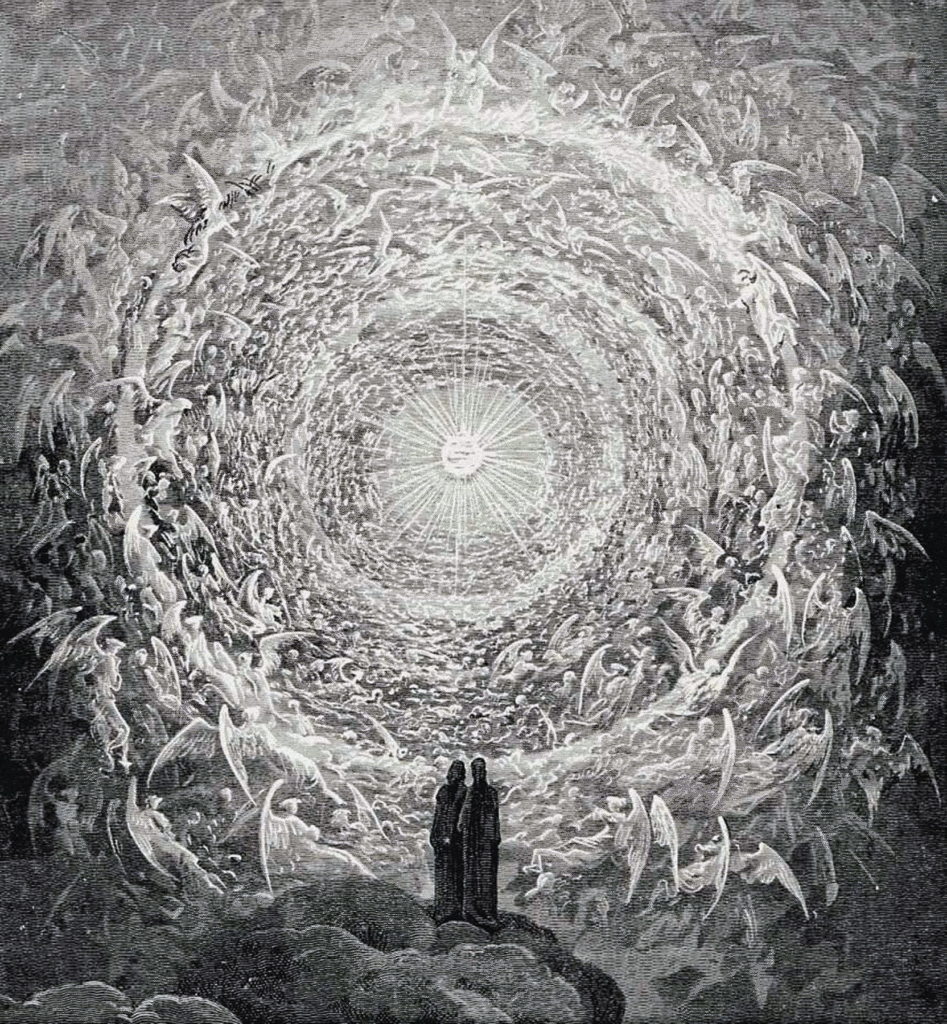
What a beautiful way to think about someone you love!!
Beatrice is not simply “pretty” or “attractive.” Dante thinks of her smile as something so profound it could make a man happy even while being tortured in flames. Just reading that with genuine appreciation can shift how you think about someone in your own life. It gives you a richer emotional vocabulary. That is the kind of thing reading does that TikTok cannot.
I’d like to call all of these kinds of stimulation the reading braingasm. That moment when the book delivers and your brain lights up. It is the kind of stimulation you want to pursue repeatedly, because that is what turns reading from a discipline into a genuine desire.
This matters because habit-building advice usually skips straight to the mechanics like read thirty minutes a day, keep a streak, use a reading app. And those things can help. But if you have not yet experienced the reading braingasm for yourself, none of the mechanics will stick. You will read out of guilt, not appetite. The goal first is to find a book that gives you that moment, even once, and remember it.
If you have been deep in doomscrolling territory, your attention span has been genuinely recalibrated. Short-form content trains your brain to expect a reward every few seconds. A book asks you to wait much longer. That gap is uncomfortable, and your brain will resist it at first. This is just how conditioning works and it is totally fixable.
The most practical fix I found is using film as a ladder before returning to books. Before picking up a book again, I spent time watching movies, starting with lighter animated films and working up to longer, more demanding ones. Film sits between short-form content and books in terms of attention required. It is a middle step. By the time I returned to reading, my brain had already been reminded that it could focus on something for two hours and feel satisfied at the end.
So if you are struggling to sit with a book right now, do not force it yet. Watch a film you have been meaning to see. Then another. Let your attention span warm back up. Then open the book.
The Practical Daily Mechanics
Once your attention is ready, the mechanics are simple:
Read one book at a time. From my experience, multiple unfinished books is not a sign of being well-read. Go at your own pace consistently. Pick one, finish it, then pick the next. Your reading list is not going anywhere.
Twenty to thirty minutes a day beats a three-hour Sunday session. Consistency matters more than volume. A short daily session keeps you inside the book’s world so you never have to rebuild the context from scratch. The Sunday marathon sounds productive but usually just means you spend the first forty minutes trying to remember where you were.
Replace one idle session, not your whole routine. Do not overhaul your life on day one. Just find one slot in your day that currently goes to your phone and redirect it. Morning commute, lunch break, or even twenty minutes before you sleep. One slot. That is all the time you need to kickstart the habit.
Do not buy the next book until you finish the current one. This is harder than it sounds. New books are exciting and the one you are currently reading might be slow. But finishing builds a kind of discipline that drooling over a reading list never will. The reward for finishing is getting to pick something new. Use that as your incentive. That is also why I recommend you pick a moderately short book for your first one.
Tell someone what you are reading. Or better yet, write about it. Accountability through an external commitment changes everything. If you have a blog, post a review when you finish. If you have an Instagram, share a quote that hit you. This is not about flexing or performing your reading life for an audience. It’s more about giving yourself a reason to finish that exists outside of willpower alone.
So far, we’ve learned that we need to:
- Have a reason why
- Pick a book
- Read according to our needs, ability, and time
- Build an attentive reading habit through chasing the reading braingasm
- Manage our attention span honestly and rebuild it if we need to
- Use simple daily mechanics and external accountability to stay consistent
Start Today, Not Perfectly
The truth about reading is that almost nobody starts with a flawless routine. I certainly didn’t. For months, I had a stack of untouched books sitting on my Kindle. Dante was barely opened, and an impulse-buy novel sat at zero pages. I was collecting books the same way people buy gym memberships in January, full of good intentions and zero follow-through.
Things only changed when I stopped overthinking and just finished something small. Success breeds momentum. Once you get a quick win under your belt, building the actual habit becomes a lot easier.
So here is your single action item for today. Open a book you already own. Not a new purchase. Grab the one sitting on your shelf, in your bag, or in your e-reader right now. Set a timer for twenty minutes and read until it goes off. That is all.
If you do not own a book yet, take fifteen minutes to search for a short title about a topic you are genuinely curious about, pick it up, and read chapter one tonight.
Do not wait for the perfect reading spot, a quiet house, or a hot cup of tea. Those extra details are often just excuses disguised as preparation. You only need a book and twenty minutes.
To borrow a point from Francis Bacon, not every book needs to be chewed and digested. Some are just meant to be tasted. Start with a quick sample and see how it goes.
I will see you in the next post, likely sharing whatever I just finished reading.
Leave a Reply